
As the credits for If Beale Street Could Talk began to roll, so did my stomach. It wasn’t the popcorn or Mr. Pibb, but the kind of pitiful churning that causes eye-prickling and hushed tones on the way out of the theater.
I was speechless. The reality-check that Barry Jenkins smacked audiences with in Moonlight (2016) did not lose its sting when revived in If Beale Street Could Talk. While the credits rolled, I was immovable, petrified by the realization of our country’s molasses-movement some may generously call “progress” in regards to racism.
Not altogether unsurprisingly, I was one of few black people in the crowd. As I listened to my white counterparts buzz around me about the colors, the costumes, and the harrowing mood created by the film, my slack-jawed awe turned to my fellow movie-goers.
“That was so dark,” said a man, stretching. He chuckled with discomfort. “Time to go watch an entire season of Adventure Time!”
“Wow, that felt so real,” said one woman.
As if racism is something to be taken with a chaser; one of laughter, no less. As if racism is something to get over as soon as possible, something to shake off. A fictional reflection of the past to be forgotten after the screen goes black.
As a black American, I cannot simply swallow this film and then go on with my day. Tish (KiKi Layne) and Fonny’s (Stephan James) trials and terrors are heartbreaking. The parallels in Jenkins’ film are too applicable to the current state of the US and its justice system.
The Pew Research Center notes the disparity of blacks and whites in prison as declining. The US prison population has blacks at 33 percent in 2018, and whites at 30 percent. This disparity seems slimmer, but less so when put into the context of the American population, in which blacks make up 12 percent, and whites 64 percent.

As Black Lives Matter grows along with the attention it has brought to police brutality and judiciary injustice toward black Americans, the attitude towards racism has changed. But is that for the better? It seems that as more representation and “progress” is gained, animosity and indifference towards race grows too. It’s a catch-22 that has always been viewed as a common, curable cold.
The tendency for movements like Black Lives Matter, is to flare up, and then die down until the next atrocity committed against the black community. I don’t have the answers, who does? But change needs to be steady, or it is ignored. And we need help from our white counterparts.
The tendency for white Americans is to be afflicted by art, testimonies, and even violence depicting the gritty past and present truth of racism in the US. This affliction is fleeting, however, and trivial. It is easily passable, forgettable. White Americans are able to ignore systemic racism. The stress and circumstance that racism causes is avoidable for them.
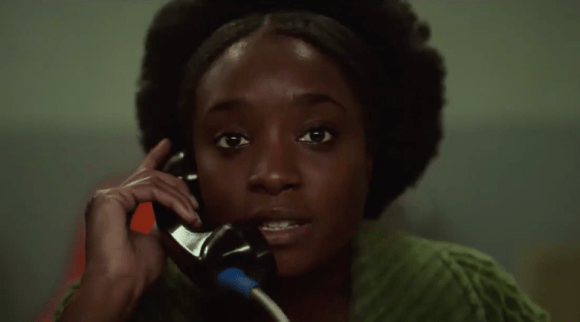
Barry Jenkins did not make If Beale Street Could Talk dark by accident. The film’s purpose is to comfort and stir those who have been afflicted by racism in America, and afflict those who are comfortable with racism in America. White Americans should rest in their discomfort. They should stir and recognize that things have not changed, that racism is a persistent reality that is not over-exaggerated or merely portrayed as dark.
Consider this film a hearing aid. If Beale Street Could Talk reiterates James Baldwin’s timeless messages about race, and necessarily emphasizes the rejection of circular injustices against which black Americans have fought for years.
While the general consensus after the film was that it was beautiful, yet dark, the film’s beauty served as a distraction from its message for many viewers. To my sensitivities, it resonated differently.
The music was bold, mournful. It was jazz-like; not joyful, but containing all of the soul and incisive emotion that makes jazz impactful. The acting was simple, and exemplified the story of countless black Americans. This happened to regular folks. The plot stressed the importance of variances in minority communities as a result of systemic racism: the friendship and understanding between different minority communities, and the division within the black community. There is camaraderie and divisiveness that tears the viewer’s attention between the beautiful cinematography and the pit in their stomach. This is America.
My challenge for white Americans is, rather than go on after being faced with racism either head-on or via the big screen, to reject their ability to comfortable affliction. Accept the reality of racism, and then reject it. Act; don’t give up, blame the afflicted, or just claim to try or care. Use any privilege available to lift up the downtrodden, because what we’re not going to do, is treat racism as passé.
Take Jenkins’ lead. Be on the right side of history, working actively to better it.


3 replies on “Has ‘If Beale Street Could Talk’ fallen upon deaf ears?”
[…] mollify or content, and is used as a quintessence of wisdom. In his film Moonlight (Jenkins, 2016), Barry Jenkins uses waves of blue and red to influence the emotional valence of its characters and in turn, the […]
LikeLike
[…] Out (Peele, 2017), a film that commented on race relations in America. Barry Jenkins (Moonlight, If Beale Street Could Talk) and Patty Jenkins (Wonder Woman) — what’s up with the Jenkins’? — have […]
LikeLike
[…] considering Beyoncé’s mononymic status in the world as a cultural and creative icon, is valid. Black filmmakers who identify as men, such as Jordan Peele, have often been relegated to making blac… These filmmakers are seen as experts upon their subject, their identity. So why the doubt over a […]
LikeLike