1918
Death does mysterious things to people. It can create sorrow, anger, riches and envy. It can leave the high-headed unbred. It can unravel the tightly wound, knot the unhinged. It can expose the true quality or value in a thing.
Dusty, Dorothy thought, as she scrutinized the veneer of grime atop the chipped paint in front of her. It was a summer Saturday, a sunny afternoon following a previous day and night of rain.
Dorothy’s eyes scanned the table’s surface. It was too worn to be considered the charming sort of dull. Her friend Gwyneth must have been rushed to use this old furniture today; she owned better. Hosting luncheon in the garden was bad enough; it had rained again yesterday, for heaven’s sake. The ground below Dorothy’s feet was impressionable. The parlor would have been a better location, if Gwyneth hadn’t been redesigning the area. It was from, and for, James’ benefit, of course. A young boy must grow in, and reflect refinement. Gwyneth was unaccustomed to work, but she had to now alongside her staff if she wanted her home prepared for company in coming days. Should there be any company coming beside Dorothy, that is.
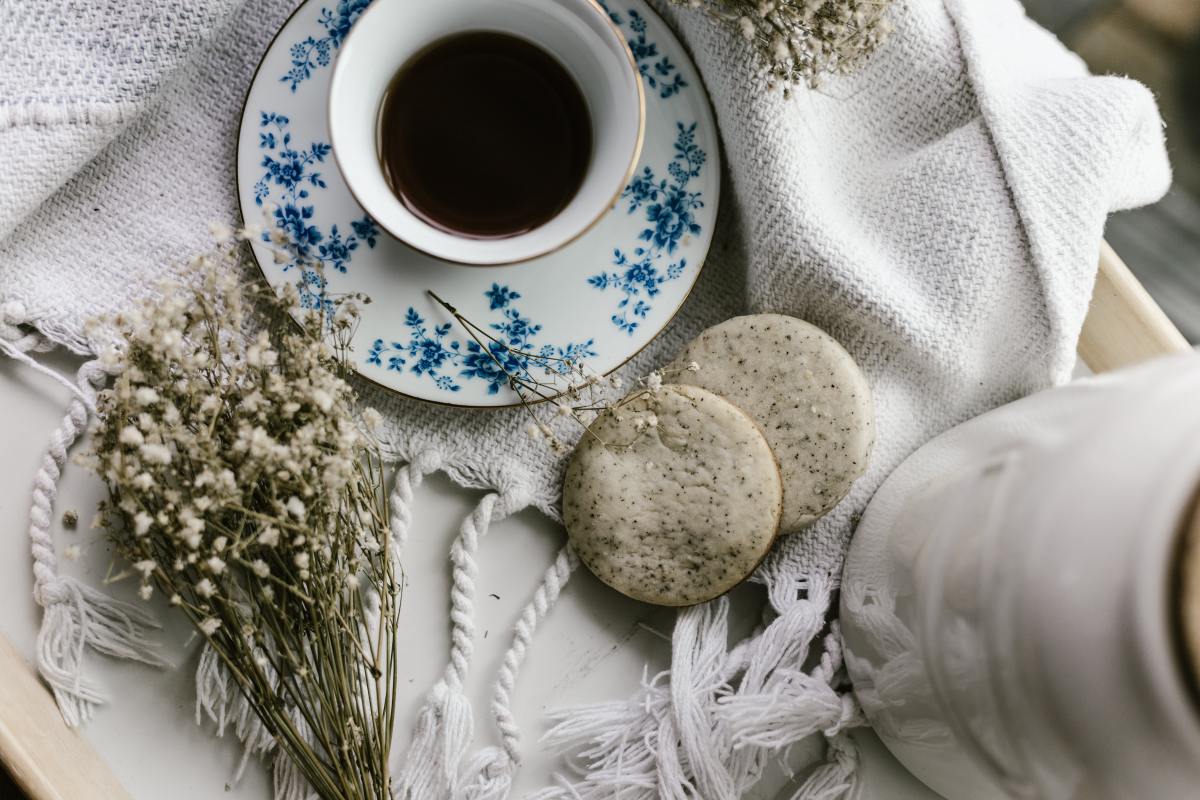
A smudged gray marred Dorothy’s white gloves, on the palms. She’d made a mistake in setting her hands on the table. Like a dear, Gwyneth called for a tablecloth straight away. Dorothy was grateful, though there should have been a tablecloth to begin with. She attended these luncheons for Gwyneth’s benefit, and perhaps even her own, for what remained of high-society and its sweets. With England’s new rationing laws, even King George and Queen Mary had to do with less than half of what could fatten them up. But she’d grown tired of the over-steeped Earl Grey, the old outdoor furniture, the not-so-sweet mounds which Gwyneth called cakes and iced far too heavily. With vanilla icing, of all things; not even a proper butter cream. Though, Dorothy should be grateful. It was more than she had, anyway. Her own ration cards could scarcely get her enough milk to wash down a piece of toast, let alone enough sugar to make an icing or host a luncheon. Gwyneth’s nephew increased her rations, and rightfully so — he was too young to fight in the war, but old enough to inhale what Gwyneth stocked in her pantry. It was lucky she didn’t eat much. He made both of the women tired, and often.
His legs made wide, James slumped in his chair across from Dorothy. The boy had been pushed upon Gwyneth by her own guilt and loneliness — the consequences of her comfortable, tragic life. Not long before the war, Gwyneth and her husband received news that his younger brother and sister in law had died in a car crash, leaving his nephew James without a home or a family, but with quite the inheritance. The boy was worth more than Dorothy and Gwyneth’s wealth combined, though the control of his funds was not in his grasp. He was too young, and who on Earth would trust a boy to spend wisely. Best to leave it to those better suited to the worth of things. Gwyneth was used to things of worth, and Dorothy was learning. Gwyneth and her husband cared for James like a son, spoiling their life together, the sum of them unprepared and unwitting.
And then Gwyneth’s misfortune doubled its worth. Conscription came, and Gwyneth’s husband left to fight in the war along with Dorothy’s. After a dwindling exchange of letters, the women found that their husbands had become entrenched in a sweep of influenza. When the news came that they both died, Gwyneth was left control of the boy’s inheritance, and Dorothy was doomed into poverty. Despite her own circumstance, Dorothy felt it was bad enough to live alone, let alone with an almost-man siphoning your resources, so she took it upon herself to provide suitable company for Gwyneth and keep herself busy in the process.
In short time without Gwyneth’s husband’s presence, James quickly fell into a pattern of insubordination, and what was old Gwyn to do, when she’d never endured a toddler’s tantrum, let alone the wild whims of a grieving boy. Dorothy provided as a relief for Gwyneth — they had socialized in the same circles before the war, and it seemed that the war that had claimed their husbands was background noise compared to the ongoing war for their wits. It was a relatively even exchange: Dorothy would attempt to help manage James, and as a result was allowed to share in the indulgences afforded to him, Gwyneth’s companionship included. James was educated, and one would assume a sensibility about him in his conduct. A sensibility similar to Gwyneth’s, for example. However, grief had changed him. Through grieving, some people are brought together, others become unhinged, but most simply become envious, perhaps hateful. All become tired and ugly. Dorothy was only accustomed to the former, but she was learning the latter. James held no esteem for the occasion, and no perception of the potential he possessed, which Dorothy coveted. This was made clear by his assumed speech and stature, the way he slurped up his tea after cramming a fourth cake-ish mound into his jagged maw. His silver spoon was thrown aside to clang against the precious china saucer and stain the white linen tablecloth tasked with catching the infinite crumbs spewing from his cud.
Gwyneth’s luncheons had been immaculate in the past. Not a thing would be out of place. In summer of 1917 the trees would’ve been in bloom, the tea and cake sublime, and the company pleasurable and appropriate. Even the flowers seemed to smile. This year, the ground was gullied by the rain. Storms, one after the other had ravaged Gwyneth’s home, and all there was left of the lawn were a few patches of ruddy grass, several made of a mud a lady would have to struggle to clean her boot of. And now there was James. James was invited out of obligation, of course. Dorothy had known Gwyneth for years. That afternoon in 1915 seemed so long ago, lost in the midst of suffrage meetings, but Dorothy never forgot the woman whose face welcomed her at the very first she attended. Gwyneth was enthusiastic and radiant, wealthy and impossibly kind. Dorothy hadn’t felt their difference in station in Gwyneth’s kindness. She baffled Dorothy, and they became fast friends, only getting closer as they fought for the vote, and Dorothy was invited for luncheons. They were happy to discuss things other than suffrage, and Dorothy was glad to be out of her house on those occasions, but now it was taking a toll on her. The interactions she had with James were taxing — she’d found a grey hair in her thick brunette. She despised the thought of it, this boy leeching her youth from her. She refused to think of it, she was only thirty-three, but you know, anyway.
Gwyneth’s hair was a scare. Once golden, it now faded from mousy blonde to grey nearer the root, poor thing. Gwyneth had always been exquisite, but less so since enduring this boy. Her once supple, ivory skin had taken on a sickly pallor, like cheap paper left in the sun. She tried to rouge it back to life, only to look like a lady of the night. It looked unnatural, her youth gone as well. It made a mockery of her sallow cheeks. They had sunken in, much like the rest of her; stress looks positively devastating on the body. Her eyes once shone like jewels, bright green. Not quite an emerald, not a peridot, but somewhere in between, and lovely. Now, they looked like bulging, grey spheres of water, ready to burst and release murky tears into her sunken dark circles. Her lips were rouged to life with a heavy-handed desperation that mimicked her grasping authority over James. Gwyneth strived to maintain her high-society look, as James drug her spirit all the while.
Hosting James was no piece of cake, but through hard work and routine, she’d been able to manage him thus far. But he was 13 now, and becoming incorrigible. His father and mother had brought him up right — with a proper education, a respect for his betters, and the rod if necessary, but now he was free of all that, spinning with glee under Gwyneth, and at times Dorothy’s, fumbling supervision. They continued their attempts to groom him, but he seemed content in his retreat, his sloppiest of existences.
No napkin in his lap, no gloves, no posture, Dorothy thought.
He’d been causing Gwyneth stress enough to forget her own gloves, and her hat, too. It was a wonder there was still luncheon at all, after his arrival. None of the other ladies from their former meetings showed up anymore. Beauregard, Hortensia and Annabeth all declined Gwyneth’s invitations. Silence made up Gwyneth’s days, and Dorothy found herself to be the only friend left in Gwyneth’s world.
Gwyneth maintained these luncheons as a lure for the other ladies, but Dorothy proved to be the only woman to stand James. Eons upon luncheons ago, James had spat a bout of coconut cream cake with whipped topping upon Hortensia’s skirts. He let out a laugh, she let out a scream, a puff, and huffed her way out of the garden’s gate. That was the last luncheon of the summer of 1917. Gwyneth was beside herself at his behavior. Dorothy, remaining loyal to Gwyneth, arrived to find her picking at her nails nervously, while James did the same.
After an hour of pleasantries, Dorothy shook herself out of the doldrum and grasping her teacup, snuck a glance at her watch. Just four-o-clock. Confound it, she’d have to come up with an excuse to leave early this time. One minute more of James, and she may say something unseemly, which he would only mimic or undermine. A pity, as it was a beautiful day. The sky was lovely and still this afternoon; a surprise after last night’s frightful howling. The storm had spit mercilessly at the earth, destroying Dorothy’s own garden, ruining her flowerbeds.
“…now please, James, chew more slowly. It’s unseemly to devour two cakes, not to mention four. Use your napkin! For heaven’s sake, it’s bestial, positively bestial!” Gwyneth’s yelping consternation, as usual, did more to rile herself than inhibit James.
“Why should I let the cloth tidy up? Seems a waste, isn’t it?” James licked a circle around the entirety of his mouth, cleaning the frosting from his lips.
“I’ve had it! You won’t have dessert tonight, James. There are proper table manners.” Gwyneth’s face looked akin to the strawberry that sat on her plate.
James laughed. A mocking laugh, knowing full well Gwyneth would ask his presence that night, lest she eat alone, and he would have his fill of whatever he desired. Through her grief, she’d come to rely on James. It was only fair, he was always around, and Dorothy had taken quiet notice of this. His money was keeping them comfortable, and Gwyneth was used to comfort, and wouldn’t lose it. He was curiously buying and earning his place in their home. He sat back in his chair, and began picking at his teeth with the spokes of his fork.
“After all the hard work you and cook went through for dinner? And when we should be rationing? Seems a waste…” James went on with licking his utensils.
Dorothy extended her arm and placed her hand upon James’ pinstriped elbow.
“James, you’ve got to learn how to dine properly. A young man of your station would do well to—”
“What would you know about my station? I heard about your estate, Gwyneth told me. The way I see it, I paid for these cakes, and I’ll eat as many as I like.” James spat. “You may eat our food, but that doesn’t mean I have to listen to you.”
Insolent child, thought Dorothy.
“You, know nothing.” Dorothy would not be cowed. Her pocketbook may have been empty, but she was there for more than just almost-cake.
“Dorothy, perhaps you should go.” Gwyneth’s voice was tired and low, but there was something else. “I think there’s been enough festivities today, I’m getting tired. Feel free to take some cake with you.”
Dorothy was startled. It was a harmless statement to some, even a generosity, but Dorothy heard the edge. Charity. It was an insult she had never gotten used to, especially when it came from those least expected.
“I see. Well, this has been…lovely, Gwyneth. I suppose I’ll be off.” She produced a smile, gave a small nod with her eyes to the ground, and rose from the table to take her leave. As she turned dejectedly towards the garden’s gate, James eyed her closely.
“Why, you won’t be staying for supper? There’s plenty to go around. I ain’t having dessert it seems, so there’ll be quite the lot for you.” James twirled his fork through his fingers as he spoke.
Gwyneth looked embarrassed and said nothing. Dorothy looked toward the gate, and thought she’d much rather eat the daisies sprouting around it. She turned, stoning her expression, and addressed her friend, looking Gwyneth in the grey eyes, eyes that had changed.
“While that all sounds very nice, I’m afraid I’ve got business to attend to anyway. Bills to pay, errands to run, that sort of thing. You understand…good-bye.” Dorothy moved to face the gate again.
As Dorothy took a step away from James, she tried to shake the strange look Gwyneth had fixed upon her, the voice she had used. It seemed questioning, exclusive. As if she were the nuisance. Oh, how James had behaved at tea, how he had spoken so abruptly and out of turn with Dorothy. Dorothy was only replying as Gwyneth would have. Perhaps that was the issue. Perhaps, in further misfortune, Gwyneth had come to cherish James further than Dorothy. Or perhaps, and more likely, his inheritance and the sweetness it provided.
Just a few more steps until I’m out of this backwards Eden and back at home. Oh, I wish James would simply disappear so that Gwyneth would— Dorothy’s foot was lodged in what looked to be an amalgamation of unkempt grass, mud, and rainwater.
Thrown off balance, she toppled onto the grass, giving a yelp. Raucous laughter erupted from behind Dorothy. Before she turned to glare, she knew what she would see. James’ head was thrown back as he uninhibitedly let out an uproar. Gwyneth’s eyes went wide, and her hands flew to her mouth, and then the table, raising a clatter amongst the china.
“Hush, oh hush James. Stop it, this instant!” Gwyneth grasped at the tablecloth in front of her desperately, as if it were her reputation, as Dorothy felt her own fingers tighten between the grasses around her.
Dorothy wished it was James’ neck. She said nothing as she rose slowly from the ground. James was wiping tears from his eyes, panting in elation at the display before him.
“Quite all right, Gwyneth,” Dorothy spoke slowly, trying to hide her fury.
Gwyneth looked uncomfortable. As if she were holding something in. Perhaps an apology, an invitation, a reprimand for James. Perhaps a laugh of her own. “Oh, Dorothy…” and that was the end of it.
James blinked what Dorothy took to be an attempt at a wink in her direction. Dorothy turned on her feel and marched out of the garden. Over her shoulder she heard James croon, “Good job she doesn’t fall on her arse next time.”
Nearly back at home, Dorothy pursed her lips and shook her head. James or no James, she wondered about Gwyneth. Dorothy’s companionship with her was valuable, even if she had to manage the difficulty of James. His wealth had become a siren call for Gwyneth it seemed, luring her away from Dorothy and drowning out the memory of all their old talks. The stress alone in caring for him would hurry Gwyneth toward having had enough, and James toward a newfound comfort in the entirety of his inheritance. Dorothy had tried to be her family, and was there for Gwyneth, but what she scrounged for in James she could not provide. Despite his shortcomings, his pockets ran deep, and Dorothy knew which comfort Gwyneth was coming to prefer.
As Dorothy contemplated her worth, the skies began to darken again. The beginning droplets of another storm hit her brow as she hurried inside. Perhaps there wouldn’t be luncheon again. Perhaps she wouldn’t be invited. She wouldn’t have to endure James, at the very least, but there would be no more cake, no more Gwyneth. She opened the door to her home with an ear-splitting creak.
From one pigpen to another, she cursed under her breath.
Dorothy’s home was in disrepair. She sidestepped buckets littering the floor from nights previous when she’d tried to contain the rain. She’d had to improvise until she could get someone to come by and fix up wherever the holes in the roof seemed to be. As she sat by the fireplace, Dorothy’s boots began to dry. The mud was thick, and they reminded her of James. Expensive material, but layered in filth. She’d clean them off later, she decided. Instead, she got a cup of tea, and relaxed. No sugar, no milk. She’d been going to Gwyneth’s for the better part of a year to indulge herself in the two.
Despite her shortcomings, Gwyneth still managed to put on a luncheon, with her abundance of resources. Dorothy twisted a few strands of hair through her fingers and thought back to when Beauregard, Hortensia and Annabeth had expected her to join their crowed foot, downcast sneer at Gwyneth on that last luncheon of 1917. She hadn’t been able to do it. It would’ve been a betrayal, a denial of family and the richness of their bond. So Dorothy had waited it out, much as she waited out the war, and the end of the end of sugar and milk, as well as storms that rained holes through her roof. She was tired of waiting, of wanting. Her fingers found the grey hair, and slowly, she pulled it out, not minding the pain. She looked at it with fresh eyes, eyes that were still their truest blue, and said good-bye for the second time that day.
Nevertheless, Dorothy thought. There are things uglier than poverty and old age.

 Philip Runia