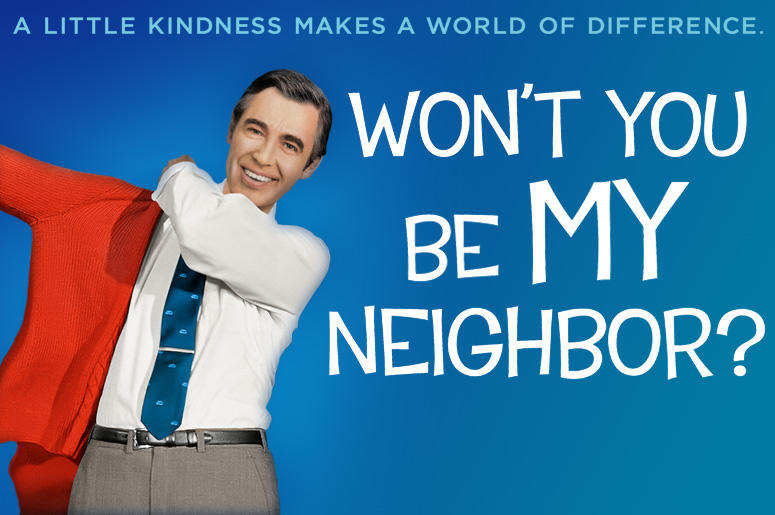

I’ll admit I didn’t know much about Fred Rogers before I watched his featured documentary. Released on June 8, Won’t You Be My Neighbor? reached theaters nationwide, but fell short of my interests. Avoiding what I assumed to be a corny, treacly display of a puppeteer’s career, I opted to stay home on release day. There were more exciting things to see.
A month later, I was talking to a guy online (Dan) trying to figure out where to go in order to meet for the first time. A public place, of course. We decided on Film Scene, a local art house theater in downtown Iowa City. Our options were pretty sparse at the double-screen theater, but we made do and decided on Mister Rogers.
Grateful for the originality of the suggestion in comparison to the typical horror or romantic date movie, Won’t You Be My Neighbor? sounded perfect; minimal pressure.
After five minutes of talking to Dan, I began to fear for the rest of the evening. We were not kindred spirits. Thankfully, talking is frowned upon at the cinema.
Directed by Morgan Neville, the biopic of kindness taste-maker Fred Rogers primarily focused on Mister Rogers’ influence upon the United States, beyond childly entertainment. A fact then hidden from the public, is that Mister Rogers was a far more inclusive neighbor than America itself was over the duration of his show.
The feature showed the former minister using his platform to elucidate complex issues in the world for children and adults alike, performing a great favor to parents nationwide. Rogers’ political, secular ministry covered topics ranging from race politics to war and from anger to grief.
The theologian’s philosophy favored liberalism. He found that every individual was special and had the capacity to discover and understand their whole range of emotions. This philosophy allowed him to approach all people with kindness and humility, including children and those who may have felt lesser or have been seen as lesser by society.
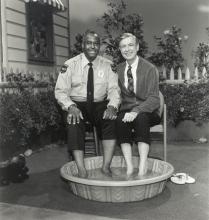 More poignant parts of the film included Rogers sharing a cool pool of water with a gay, African American man, François Clemmons, and Jeff Erlanger, a quadriplegic boy. Both of their appearances fueled controversy, but they also bolstered confidence in underrepresented communities by seeing themselves onscreen.
Government and far-right-wing critics made outrageous claims against Rogers’ motives and sexuality. Accusations of homosexuality, pedophilia, child-targeted conversion, and of course, progressivism ahead of its time, were all leveled against Fred Rogers.
Rising above all allegations, Mister Rogers proved that neighborliness is the solution to all manner of evil in the world. Hosted by the child-caring, Dr. Phil-esque educator, Mister Rogers’ Neighborhood served as an educational tool for a tumultuous nation, allowing all manner of viewers to adjust to a changing world for 31 seasons. In the current state of the nation, Won’t You Be My Neighbor? could not have come at a better time. Television has been lacking since Mister Rogers’ departure and death, but the big screen welcomes his legacy, as should movie-goers everywhere.
The film lightened my mood considerably, and persuaded me to approach the remainder of the date with an open mind toward my neighbor. The rest of the date wasn’t too miserable. We took a walk around Iowa City, talking about politics, religion, and other topics of courtship housekeeping. Dan turned out to fall short of my romantic bar, but Won’t You Be My Neighbor? exceeded my expectations greatly. It is not the typical date movie, but still a worthy feature, even if you have to pay for it yourself; I did.

 Philip Runia